Miguel de Cervantes Saavedra (1547-1616) was a Spanish writer, often considered the greatest author in the Spanish language and one of the world’s pre-eminent novelists. His most renowned work is “Don Quixote,” which is widely regarded as the first modern novel.
Life:
Cervantes was born in Alcalá de Henares, near Madrid, Spain. He had a tumultuous life, including a stint as a galley slave after being captured by Barbary pirates, and he worked variously as a soldier, tax collector, and government employee. He was also a playwright, poet, and essayist, but his literary fame rests primarily on his novels.
Works:
Cervantes’ first significant work was “La Galatea” (1585), a pastoral romance. However, it was his novel “Don Quixote” (1605, Part I; 1615, Part II) that brought him lasting fame. The story revolves around the adventures of a noble named Alonso Quixano who reads so many chivalric romances that he loses his mind and decides to become a knight-errant, renaming himself Don Quixote de la Mancha. His loyal squire, Sancho Panza, accompanies him on his adventures. The novel is a satire of chivalric romances, but it also explores deeper themes such as reality, identity, and the power of literature.
Cervantes also wrote several collections of short stories, including “Novelas Ejemplares” (Exemplary Novels, 1613), which contains twelve short stories, each with a moral lesson.
Importance of his literature:
Cervantes’ works are considered foundational to the development of the modern novel. “Don Quixote” is particularly influential, not only for its innovative narrative structure and its exploration of complex themes, but also for its self-awareness as a work of literature. Cervantes’ use of irony and metafiction (fiction that self-consciously reflects on itself) has influenced countless authors since.
Aftermath:
Cervantes’ works were widely read and admired in his lifetime, but it was after his death that his reputation as a literary giant truly solidified. “Don Quixote” has been translated into virtually every language and has never been out of print. It has inspired numerous adaptations, including operas, plays, films, and even a ballet.
Relevance today:
Cervantes’ works continue to be relevant today for several reasons. Firstly, “Don Quixote” is a timeless exploration of the human condition, dealing with themes such as idealism, reality, and the power of imagination. Secondly, Cervantes’ innovative narrative techniques continue to influence contemporary literature. Finally, his works offer valuable insights into the society and culture of his time, making them an important part of the historical record.
Portraits:
There are no confirmed portraits of Cervantes from his lifetime. The most famous image of Cervantes, which appears on the cover of many editions of “Don Quixote,” is a 1653 engraving by Jean Jacques Bachelier, based on a description by Cervantes’ friend, the playwright Juan de Jáuregui.
AI portraits:
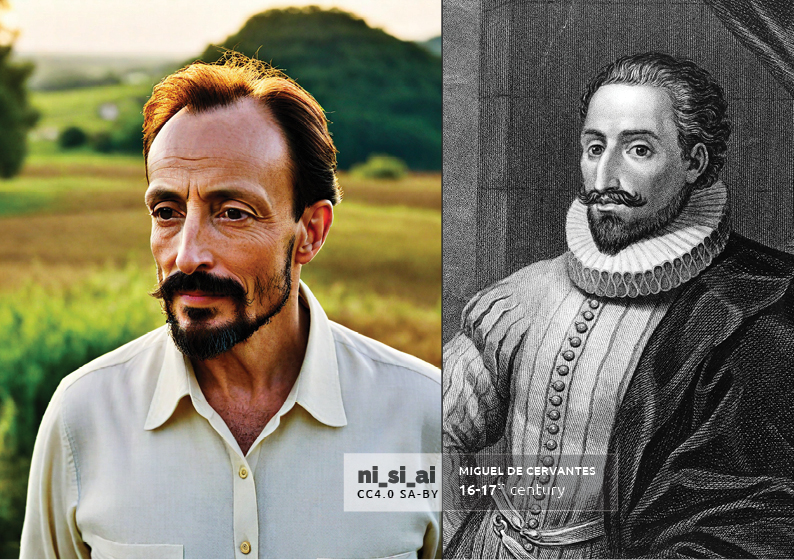
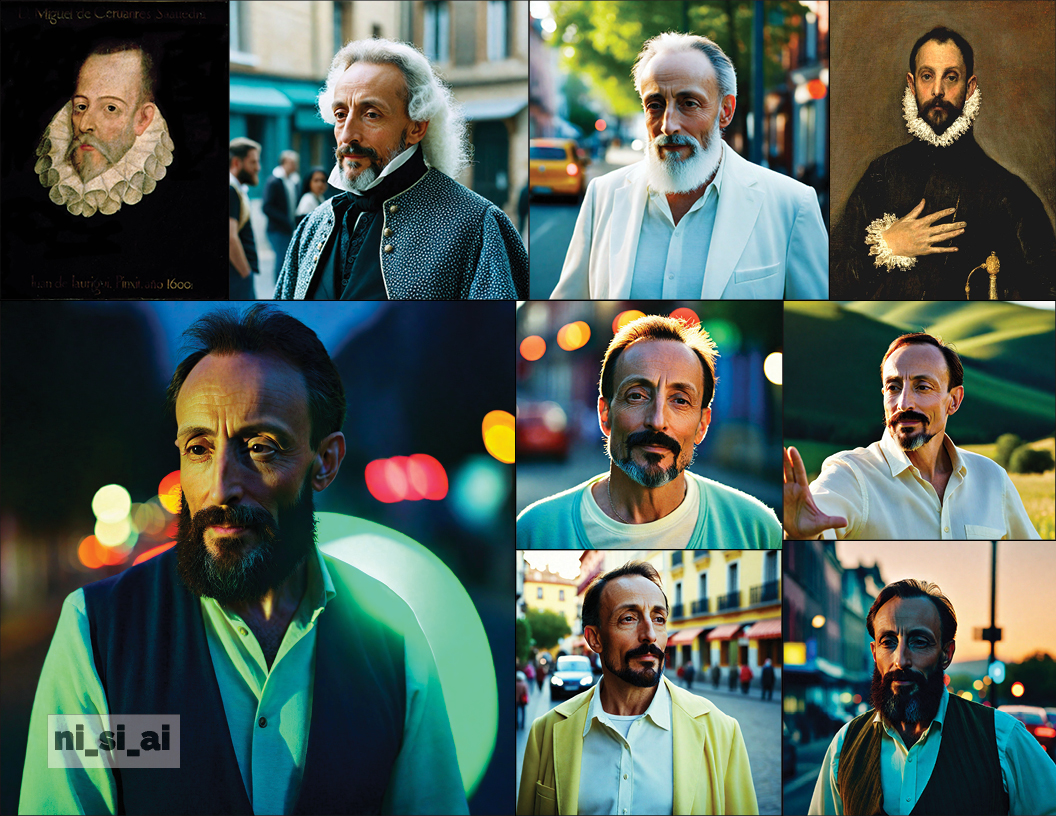
variants
Discover more from Sic Tranzit
Subscribe to get the latest posts sent to your email.